First projected-reality prototype
Mapped a live interface onto moving physical objects.
CLAUDE CODE FOR PHYSICAL WORK
The system sees the bench, understands the task, and points to the exact part. No headset. No screen switching. Both hands stay on the work.
BUILT BY A FORMER APPLE VISION PRO INFRASTRUCTURE ENGINEER×FORMER HARDWARE TRADES WORKER
San FranciscoHands-on · 2026
BUILT FROM BOTH SIDES OF THE PROBLEM
Two years building Vision Pro infrastructure showed the limits of a display people remove. Years in the hardware trades showed the same gap from the other side: instructions live away from the work.
Apple Vision Pro infrastructureHardware tradesBuilding full-time in SF
Mapped a live interface onto moving physical objects.
Saw headset friction from inside spatial computing.
The prototype helps build the next hardware iteration.
THE BROKEN WORKFLOW
Builders still stop, find a video or spec, re-orient to the part, do one step, then look away again. Screen-bound agents cannot point at a physical connector, fastener, or solder pad.
A CLOSED LOOP FOR HANDS-ON WORK
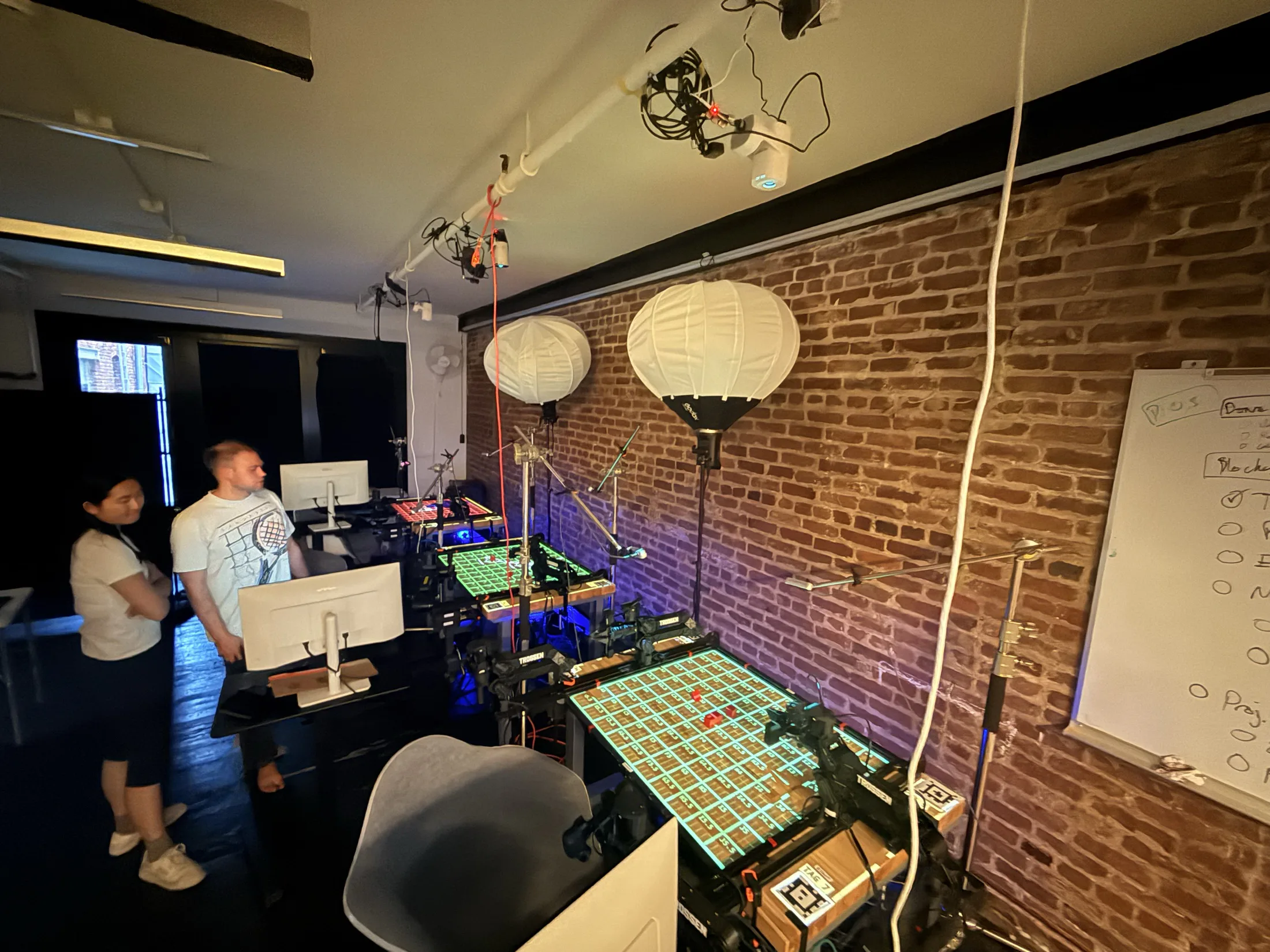
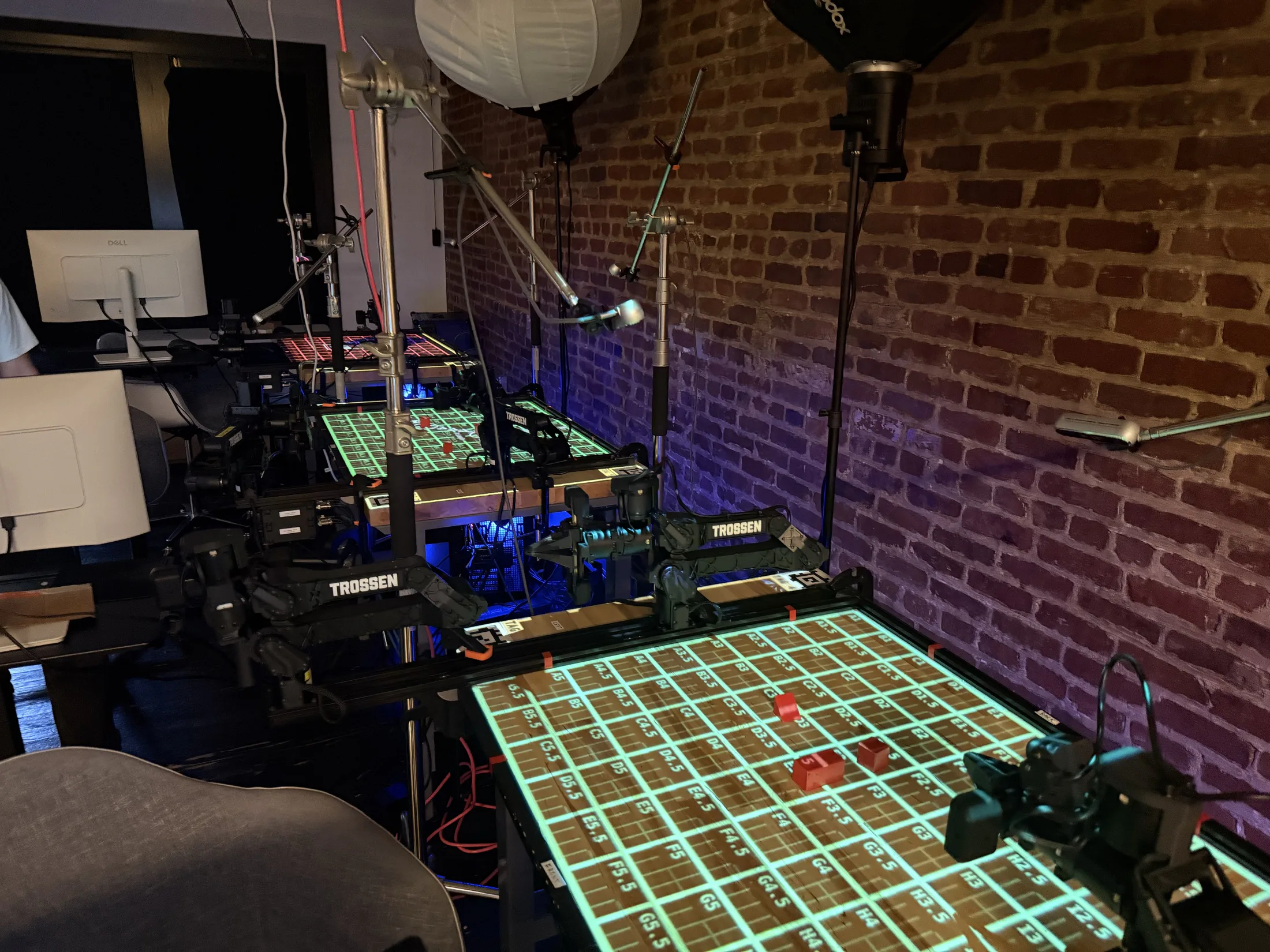
One lamp combines cameras, a vision-language model, and a projector. It sees the task, guides the action, and checks the result.
Cameras track the bench, every part, every tool, and your hands.
A vision-language model understands the task and its current state.
The next action lands in light on the exact part that needs it.
The system checks the result before moving to the next step.
THE WORKING SYSTEM, NOT A RENDER
These are the full set of videos published across the original site: physical registration, object awareness, perception, room understanding, and ambient interface studies.
A live instruction layer follows the page as it moves. The same registration loop puts assembly guidance directly onto parts and tools.
The system sees the object, measures it, and projects the result beside it. The operator never has to translate a screen back to the bench.
The camera reads dimensions from the physical scene. The projector puts the answer where it is useful: on the table, next to the thing.
This earlier measurement pass shows the core loop in its simplest form: see the bench, understand the geometry, and answer in light.
An overhead camera keeps the working surface in view while the projector turns it into a shared, hands-free display.
Pose, motion, and presence are read from the live scene so guidance can react to the operator, not just a fixed instruction script.
The system recognizes what entered the workspace and projects context next to the physical object instead of opening another window.
START WHERE VARIABILITY HURTS
Small hardware teams assembling, debugging, and repairing changing systems at a shared bench.
Show the next action, catch mistakes, and verify completion when the task changes too often to pre-author.
BEFORE THE SYSTEM CAN POINT, IT HAS TO SEE
The camera maps the physical workspace before any instruction layer reaches a surface.
Walls, floors, furniture, and usable work surfaces are reconstructed from the live scene.
The system separates table, chair, wall, floor, and door so projected UI lands on the right physical plane.
The goal is adaptive guidance: understand the live environment instead of asking an engineer to pre-author every possible setup.
THE INTERFACE CAN LIVE IN THE ROOM
Projected content occupies only the light it needs. The rest of the room stays the room.
It can sit in a room like a framed print, then become an interface only when the task calls for one.
Controls appear on the physical surface and respond to a real hand. Nothing is strapped to the person using it.
The workbench is the first wedge. The same projected interface can extend to cooking, repair, and shared physical spaces.
The system puts guidance in the same physical space as the hands, tools, and objects it is helping with.
FOOTAGE NOT YET PUBLISHED
The archive above is real published media. These task-specific clips are clearly marked until the August 20 capture replaces them.
Projected steps on the exact fastener and part as the build moves.
The pad, component, and orientation highlighted while both hands stay on the work.
Ingredients, timing, and the next action projected onto the counter.
PRE-LAUNCH, WORKING PRODUCT
No revenue or external-user claim yet. The strongest proof today is a working system and daily founder use.
COME USE THE PROTOTYPE
We rented a house in San Francisco for a public, hands-on demo. Bring a task, try the prototype, and meet the robotics teams and builders shaping the first pilots.